

100 years of Presidential Leadership
More than just leading a college, CSM’s 10 presidents have symbolized higher education and its aims on the Peninsula and beyond
Being president of College of San Mateo involves more than just running a large workplace. Because CSM was San Mateo County’s first public institution of higher learning, was one of the county’s first colleges of any kind, and remains one of the county’s largest colleges, it plays an outsize role in how local people experience higher education. Over a century, CSM’s 10 presidents have set expectations for what higher education should be.
“The symbolic aspect of the presidency is way more important than it is as a VPI,” said Shirley Kelly, CSM’s eighth president, who served from 1999 to 2006 after being vice president of instruction. “There is a perception that you set the climate. You can brag about the College without feeling self-conscious. For example, it was nice to talk to the Rotarians and say, ‘Yes, the College does that.’”
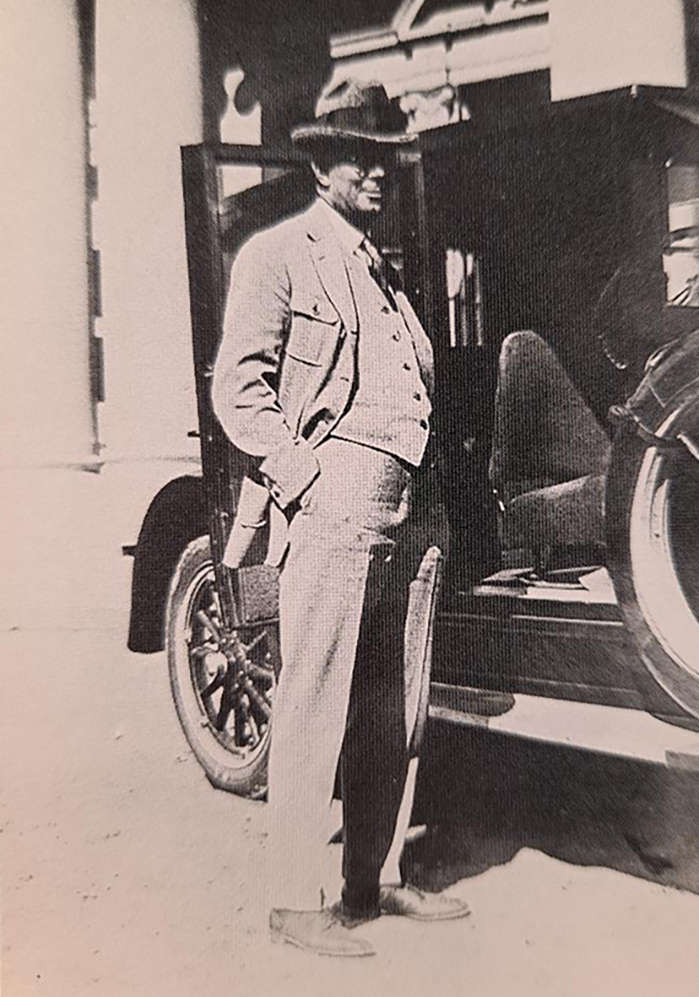
CSM’s best-remembered presidents have, like Kelly, been deeply responsive to their community. Their progenitor was William L. Glascock, the San Mateo Union High School District superintendent. After the passage in 1921 of a state law that helped California counties provide the first two years of college for free, Glascock tirelessly lobbied district voters to create what was known until 1954 as San Mateo Junior College. In 1926, he also lobbied for the College’s first bond measure. For its first few years, San Mateo Junior College ran under the auspices of the high school district—initially, on the top floor of the high school building on Baldwin Avenue. Glascock served from CSM’s opening in 1922 to 1937.
Job training or academics? The people want both
Running the new College’s day-to-day affairs was Robert J. “Hoppy” Hopkins (served 1922–31), who taught physics at both San Mateo High and the College. As dean of the College—the title of the top job until the 1930s—Hopkins cherished high academic standards for transfer to four-year schools. Yet the community demanded more from the College during the Depression as joblessness swelled local and nationwide enrollment. Desperate for work, more students sought career training, and their average age rose. Hopkins fought any changes, and in June 1931, trustees showed him the door.
Charles S. Morris (served 1931–52), the College’s first leader to bear the title of president, understood the need for change. He launched SMJC’s career and vocational education programs as well as its evening division for working adults. He forged partnerships with local employers to obtain equipment for the College and to tap their knowledge of job needs.
In a way his predecessors did not, Morris saw it as the College’s task to help students with financial need and housing insecurity. He and his wife, Carlena, opened low-cost dormitories and got local families to offer room, board, and necessities to struggling students. After Morris died in 1952, trustees renamed the school College of San Mateo—its initials paying tribute to his gifts.
Elon Hildreth (served 1952–55) had the unlucky task of following in the energetic Morris’s footsteps. The upheavals of the Depression and World War II obliged CSM to operate at three makeshift and outdated campuses. Hildreth lost a battle with trustees over a site for CSM’s consolidated location, and his contract was not renewed.
Into the breach stepped Julio Bortolazzo (served 1956–68), who raised funds and awareness for CSM’s current College Heights campus, which opened in 1963. He was the first CSM president to have a doctorate (from Harvard), and held a grandly ambitious but somewhat top-down view of what community college should be. Bortolazzo created a nationally renowned speaker’s program and the second community college TV station in America and nurtured cultural and arts institutions that continue to enrich San Mateo County today.
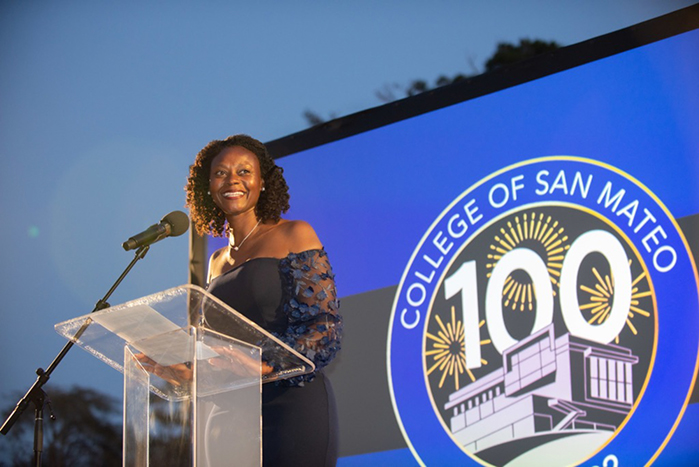
While CSM has always officially been open to all, its services, curriculum, and culture were for decades unmindful of the Peninsula’s growing Black and Brown population. As a result, Black and Brown students were egregiously under-represented on campus. In 1966, Bortolazzo tried to close this gap by green-lighting the innovative College Readiness Program for learners of color. He left before the program could solidify its fiscal and faculty support. His successor Robert Ewigleben (served 1968–71) curtailed the program, even while establishing CSM’s first ethnic studies courses. It was half a century more before the College had an African-American president, the current incumbent Jennifer Taylor-Mendoza (serving 2021–present).
David Mertes (served 1971–78) came to CSM as a biology teacher and rose to the College presidency. His administration launched women’s intercollegiate team sports at CSM in response to Title IX, the federal law that mandates gender equity in education. Well regarded by faculty, in part because he rose from their ranks, Mertes went on to become president/superintendent of Santa Barbara Community College; chancellor of the Los Rios Community College District; and chancellor of the California Community Colleges from 1988 to 1996.
Fiscal challenges and governance reform
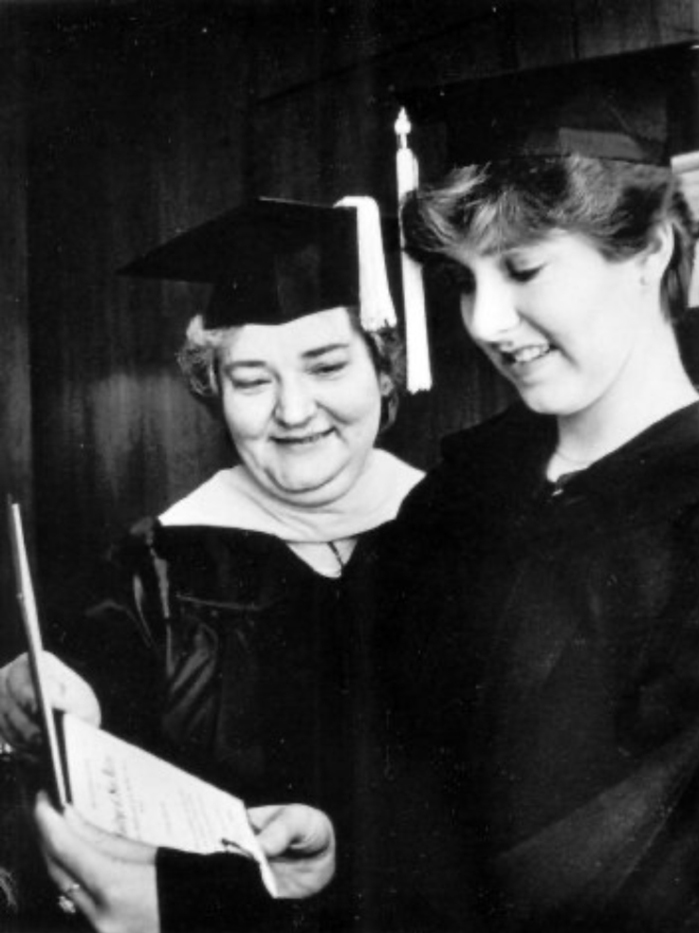
Lois A. Callahan (served 1979–1991) was the College’s first female president. A strong presence whose listening skills underlaid strong leadership, she launched initiatives at which Mertes balked, notably the Mary Meta Lazarus Child Development Center for student parents needing childcare. To preserve KCSM-TV as a unique resource, Callahan oversaw its costly and complicated switch to color broadcast. She began implementation of shared governance, a statewide community college reform written in part by future CSM President Peter Landsberger, then general counsel at nearby Foothill-De Anza Community College District.
To Callahan fell the difficult task of imposing tuition for the first time and cutting programs after state Proposition 13 slashed revenue by capping property taxes. Callahan also led CSM through a three-year labor dispute made worse by Prop. 13‑related cuts. District trustees rewarded Callahan’s navigation of these multiple challenges by promoting her in 1991 to become the district’s first female chancellor.
Attorney Peter Landsberger (served 1992–99) was Foothill-De Anza’s dean of business and computer services when he was hired to succeed Callahan as president. Landsberger is proudest of new curriculum development during his leadership, especially in integrating technology into science labs and other departments. On his watch, CSM added a strong cooperative-education accounting program and a nationally recognized networking technology program and lab.
Rather than operate in “silos,” Landsberger encouraged people to collaborate across the College with other departments. As per his work on AB 1725, the state legislation that brought university-style shared governance to California community colleges, Landsberger championed collegiality. Famously, he ate lunch with classified staff and, in a move shocking at the time, abolished seniority parking at a cherished faculty lot.
“Peter would collaboratively create a vision and then leave implementing the vision to the people with the expertise,” said Pat Griffin, then vice president of student services. “He had no need to take credit for everything; control of the process was not an issue for him.”
Landsberger inaugurated other changes at CSM that reflect dramatic advances in research into how students learn best—better in small groups than in ranks of desks listening to a lecturer—and he supported the important role of student services in helping students achieve their educational goals.
Landsberger went on to become senior vice chancellor and then interim chancellor of the Los Angeles Community College District, the largest in the nation. He was appointed special trustee of the Compton Community College District after Compton College lost its accreditation, a position he held for four years.
As well as serving on boards of several educational nonprofits, Landsberger in 2016 was elected a trustee of the Foothill-De Anza district, an office he holds today.
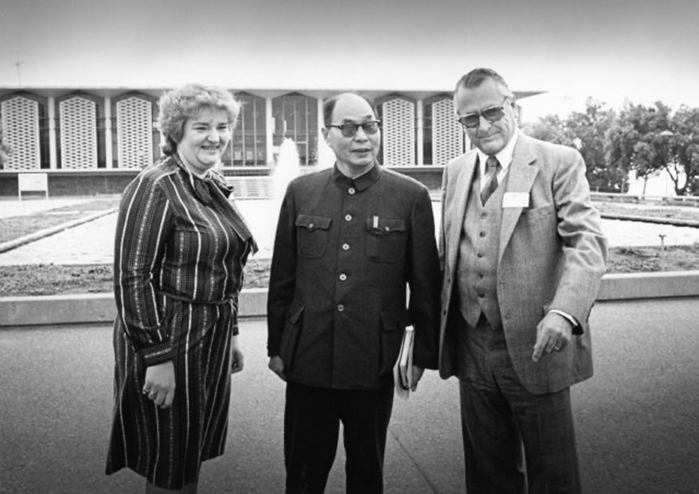
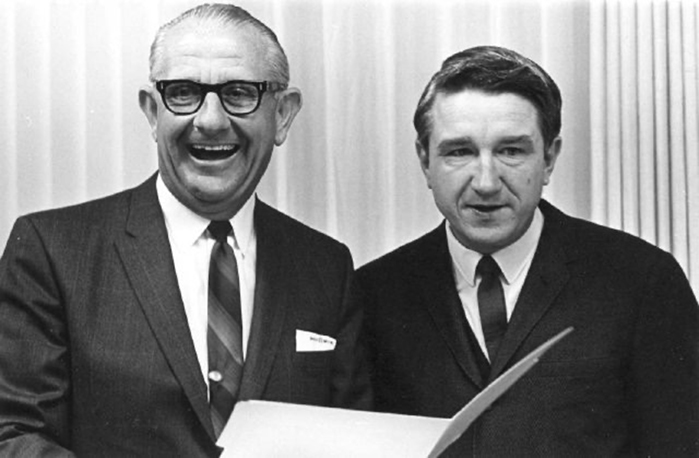
Julio Bortolazzo and Robert Ewigleben mark the transfer of CSM’s presidency in 1968. Their expressions seem to sum up their CSM experiences: Bortolazzo earned national fame for his ambitious leadership and considered College of San Mateo a high point of his life, while his successor Ewigleben stumbled on divisive issues like student protest and stayed less than 18 months. Photo: CSM Historical Photograph Collection
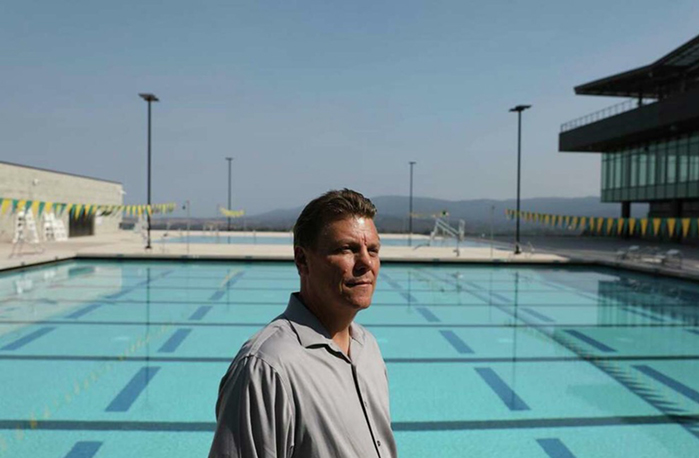
As CSM president and then as chancellor of the San Mateo County Community College District, Michael Claire led massive development and construction efforts including Cañada College’s new $120 million Kinesiology and Wellness Building. Photo: Lea Suzuki/San Francisco Chronicle
As education evolves, so must its environment
To his successors, Shirley J. Kelly (served 1999–2006) and Michael Claire (served 2006–19) fell the huge job of reshaping CSM’s beautiful but outdated campus to this new pedagogical environment.
Kelly built CSM’s first new major building since 1963, the Integrated Sciences Building, to embody these new ideas about higher education. Its architecture fosters interdisciplinarity and connections between students and faculty.
“The science building was an extremely special moment,” Kelly said. “It felt like a couple of bookends. My first sight at CSM was when I came here to see the existing science building. The last thing I did before I left was cut the ribbon at the new science building.”
Kelly also actively supported the goal of a new building designed to house student services that were previously scattered across the campus and housed in less than satisfactory circumstances. That building, College Center, opened in 2011.
In addition, Kelly added resources to CSM’s first learning communities, including Puente and Umoja. Today, learning communities are a distinctive feature of CSM.
As dean of CSM’s technology division, Clairesupervised the creation of new career and technical education programs, including digital media, network cabling, instrumentation and process control systems, a paramedic apprenticeship program, and a full POST-certified police academy.
Both as CSM president and then as chancellor of the San Mateo Community College District from 2019 to 2023, Claire did more than anyone to modernize the College Heights campus. He oversaw more than $350 million in CSM construction and renovation projects, including College Center Building 10, featured on CSM’s centennial logo, and the LEED-certified Health and Wellness Building 5.
“Mike loved the job of being president of CSM,” said former vice chancellor Gus Petropoulos. “He was highly regarded. He loved to walk around campus.”
Claire cited a quote often heard within the context of parenting: “The days are long but the years are short.”
“I can certainly say that about my time at CSM,” Claire said. “It’s true: the years have been short and my advice is to enjoy the entire experience, even when the days get ‘long.’ I enjoyed every minute of my time at the College and I loved the people that I worked with.”
“CSM is such a special place and the College will always be a part of me,” he said. “I will be forever grateful to our amazing students and to the wonderful colleagues that I have known over the years. It has been the honor of my professional life to have served as the president—it’s the best job that I have ever had.”
Leading for social justice and liberation
Jennifer Taylor-Mendoza (served 2021–2023) made her mark at CSM long before returning as its president. As CSM’s founding dean of academic support and learning technologies, she expanded the College’s signature learning communities and its resources for communities at risk of marginalization.
Taylor-Mendoza provided leadership for social justice and liberation, recognizing the shared responsibility to address the historical legacy of racism to create a more just system of access, reward, and long-term equitable outcomes to inspire individual achievement and generational impact. The “obligation gap,” a term she coined, speaks to institutional responsibility. Taylor-Mendoza is co-author of Minding the Obligation Gap in Community Colleges: Theory and Practice in Achieving Educational Equity.