Bubble Nebula
The Bubble Nebula is an emission nebula in the constellation Cassiopeia. The red color that you see in the image is being emitted by a very large cloud of hydrogen gas (a nebula) where new stars are being formed. Inside that nebula is a very massive, young, hot star whose stellar winds push back on the surrounding gas cloud. This creates a void around the star and hence, the bubble!
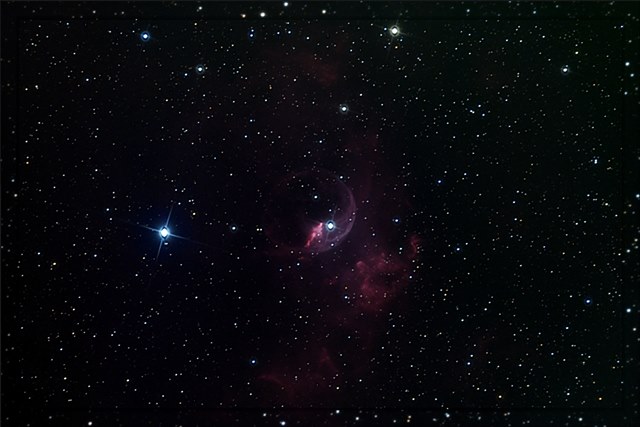
Photographed by Tony Pena and Ido Liron, October 12, 2015
using our 20" RC telescope with an SBIG STL-6303E camera cooled to -10°C
Capture info:
Red 5x300s
Blue 5x300s
Green 5x300s
Lum 8x300s
Total exposure length: 1 hour 55 minutes
Images are binned 1x1 and guided
Total exposure length: 1 hour 55 minutes
Images are binned 1x1 and guided
V vs B-V Diagrams
Students are taking their own photometric data to construct V vs B-V diagrams for various open and globular clusters. This technique allows students to determine the age and distance of a cluster by examining the cluster’s main sequence on the Hertzsprung-Russell (HR) diagram. Students have learned this process in their introductory astronomy class and they are now able to use it in practice. They have taken data of open clusters M36, M37, M38, and M44 as well as globular clusters M3 and M56. Preliminary results closely match those in the established literature. -Professor Stanford
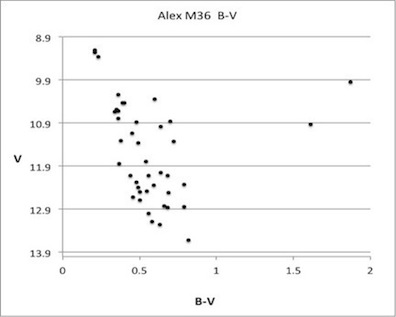
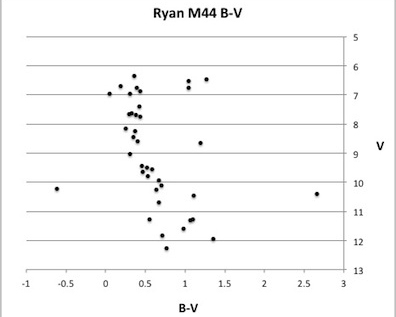
M36 B-V data Alex Chassey -CSM Observatory M44 B-V data Ryan Dewitt -CSM Observatory
Horsehead Nebula
Astronomy 204 astroimagers Ryan Dewitt and Lukas Fragodt, took images of dark nebula Barnard 33 located in the constellation Orion. Twelve 5-minute exposures were combined for the final image. The Horsehead lies 1.5 key away.
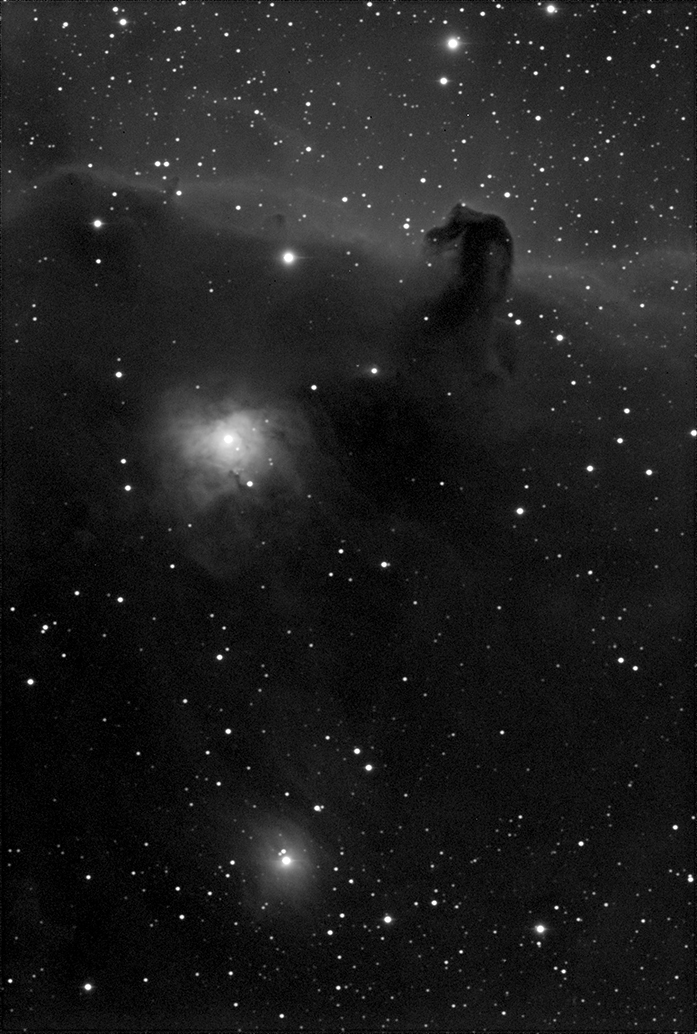
Horsehead Nebula Ryan Dewitt & Lukas Fragodt, CSM Observatory
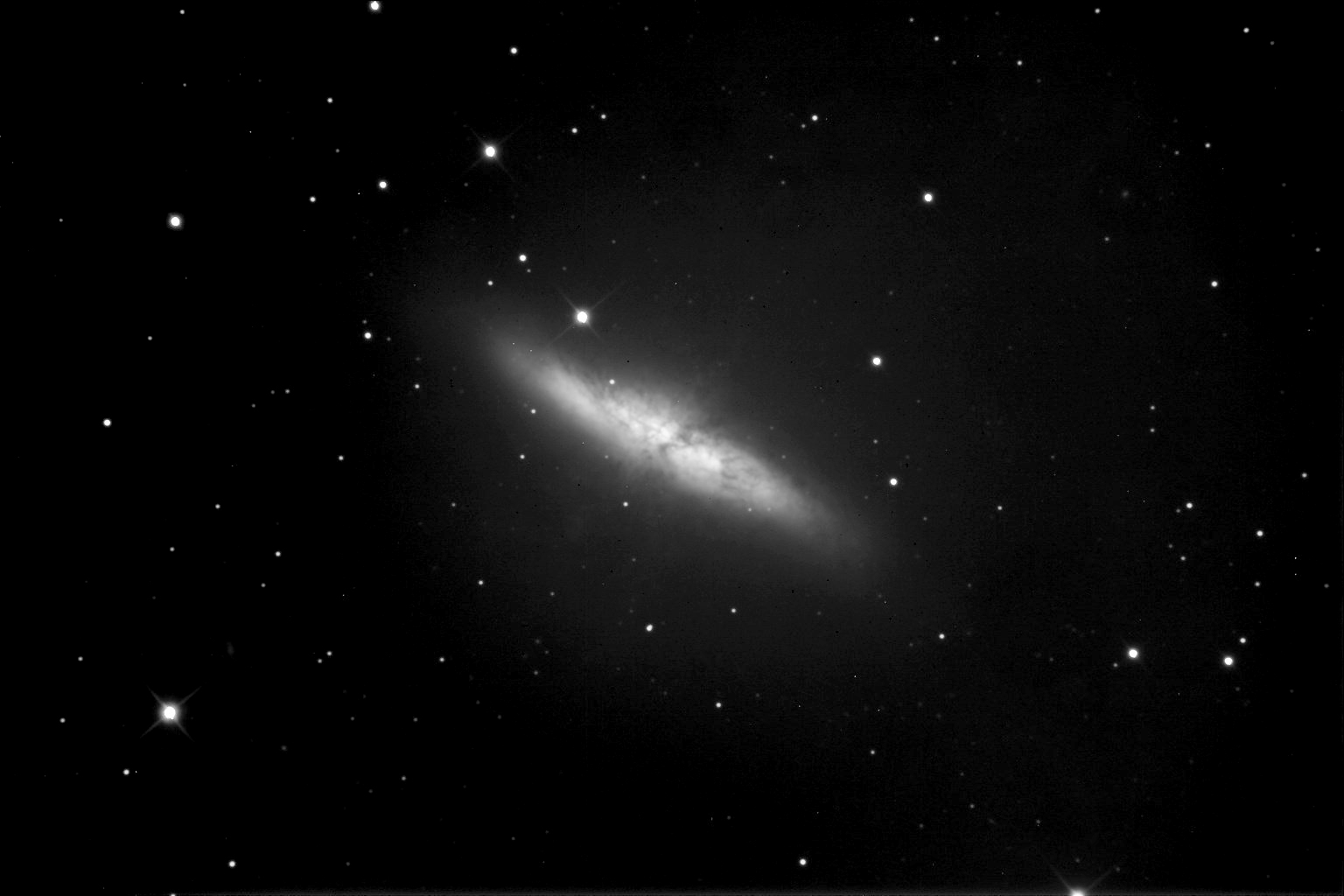
Galaxy M82
204 astroimaging students George Derugin and Ryan Dewitt took images of M82 (The Cigar Galaxy) in the constellation Ursa Major. George then combined twelve, 5 minute images of M82, using CCDStack software. The Cigar Galaxy lies ~ 12 Mly away, and was home to supernova SN2014J tracked by CSM students in January and February 2014. (bottom of page)
Larger image
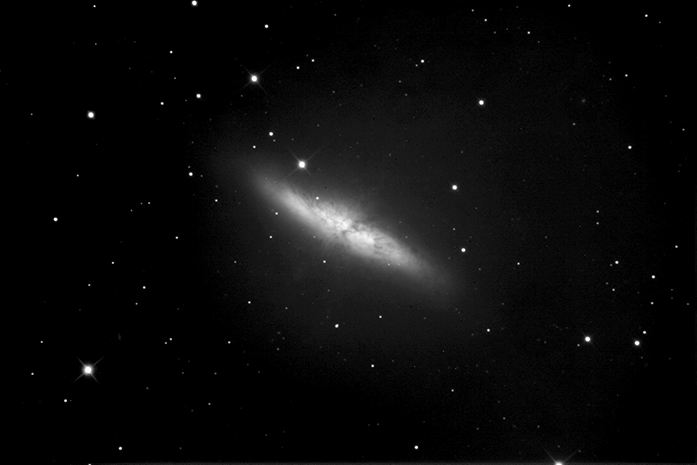
M82 George Derugin, Ryan Dewitt -CSM Observatory
M87 "Jet"
Student Peter Roomian photographed Messier object M87 with our 20" RC telescope. The image reveals M87's famous jet of energetic plasma extending 5,000 light years from the galactic core. Twelve, 300 second images were combined for this photo. M87 lies ~ 53 Mly away in the constellation Virgo.
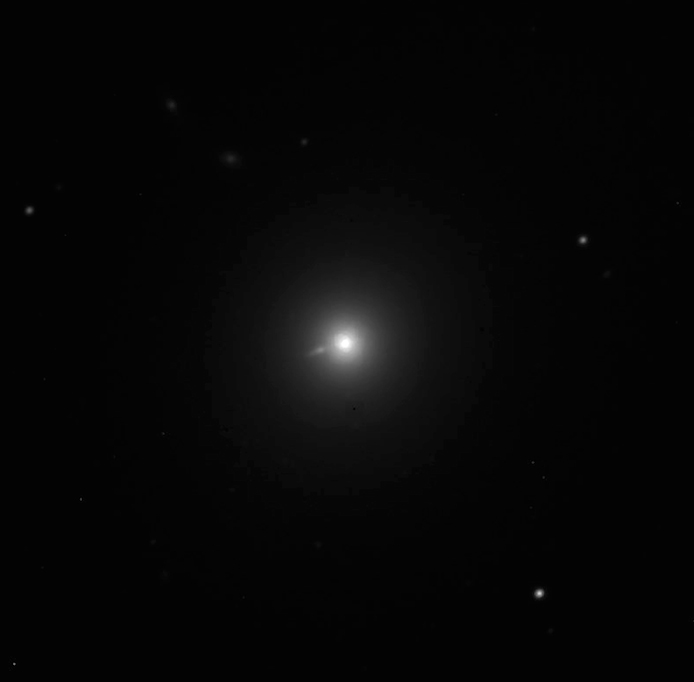
M87 /Jet Peter Roomian, CSM Observatory
Exoplanet WASP-43b
Students Lukas Fragodt, George Derugin, and Ryan Dewitt gathered data on transiting exoplanet WASP-43b from our observatory the local night of 3-4-15. The graph shown was created by and published on Czech Astronomical Society TRESCA website. WASP-43b is a Hot Jupiter orbiting a star ~260 light years away in the constellation Sextans. 40 data points were taken with our 140mm f/7 refractor, processed with MaximDL software.
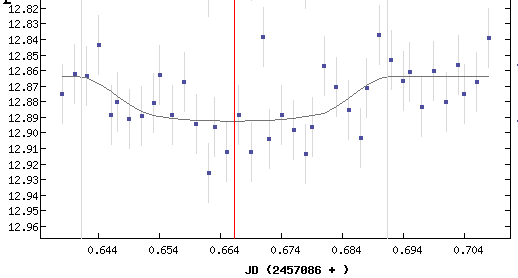
WASP-43b Lukas Fragodt, Ryan Dewitt, George Derugin -CSM Observatory
Jupiter Video
Student Peter Roomian created a video by combining ~200 images of Jupiter taken with our 20" RC telescope, over a 2 hour period. Jupiter's Great Red Spot is visible rotating right to left. The original video file was created in Maxim DL. Jupiter video
W Ursae Majoris
Contact binary star WUma lies ~170 ly away in the constellation Ursa Major. Students George Derugin and Ryan Dewitt took data of WUma from our observatory the local night of 3-11-15 between 8:30 and 9:52 PM. A non-variable comparison star used to perform photometry in Maxim DL, appears at bottom of the graph. X= time (JD) Y= magnitude JD converter
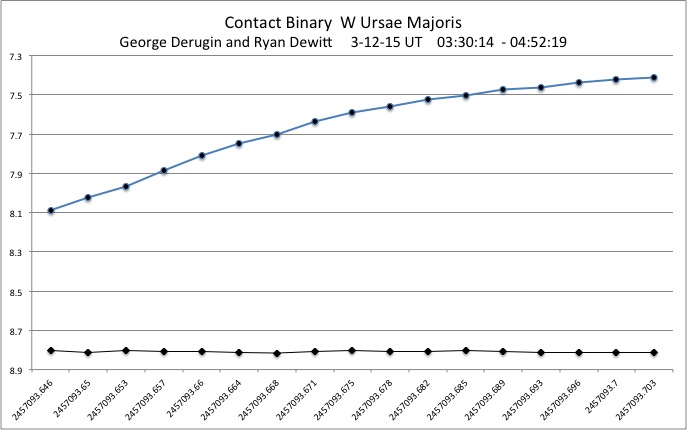
WUma George Derugin and Ryan Dewitt, CSM Observatory
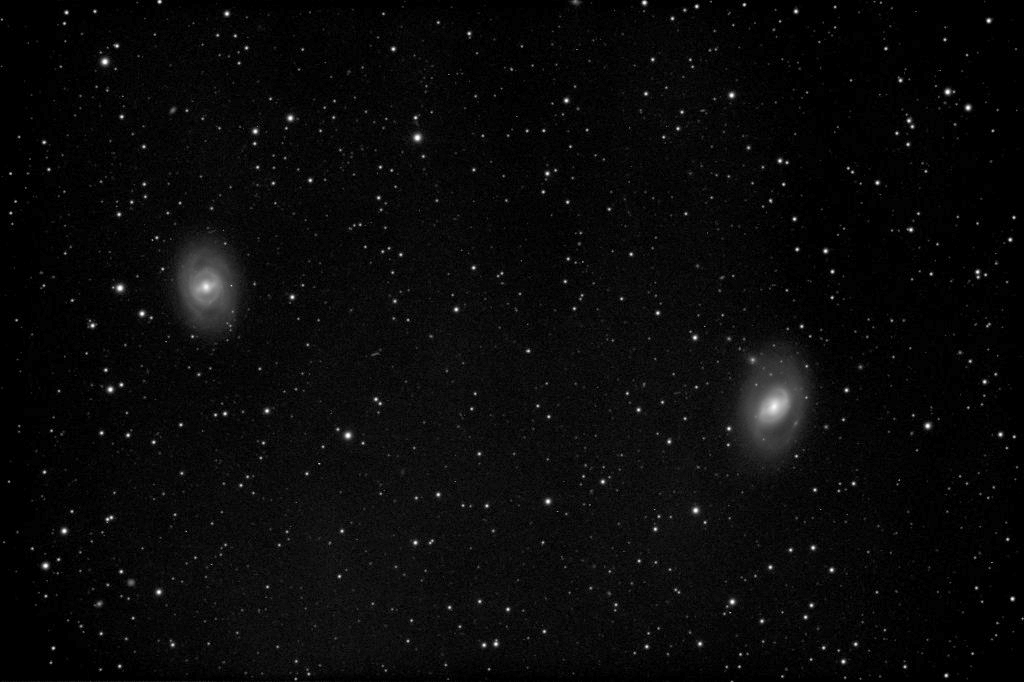
M95 & M96
Galaxy pair M95 (left) and M96 (right) in the constellation Leo, are part of the local Virgo Supercluster of galaxies. Students Ryan Dewitt and Nick Denton took twelve, 300 second exposures on 3-18-15, which were combined to create this final image. Photos were taken with our 180mm TEC refractor and SBIG STXL-6303 CCD camera. The field of view is 50.2 x 75.3 arcmin.
Larger Image
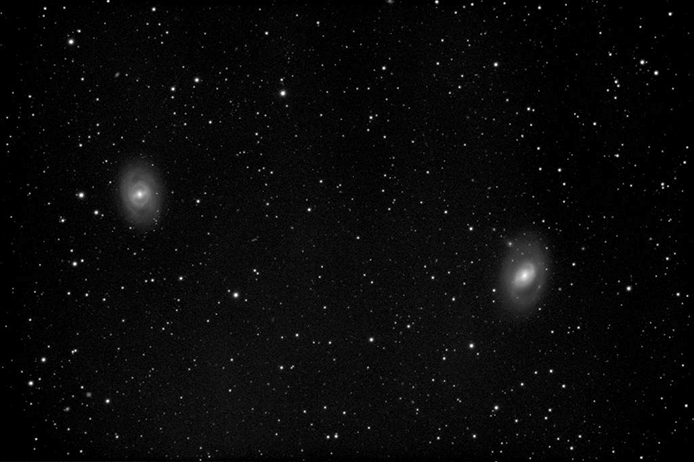
M95 M96 Ryan Dewitt, Nick Denton -CSM Observatory
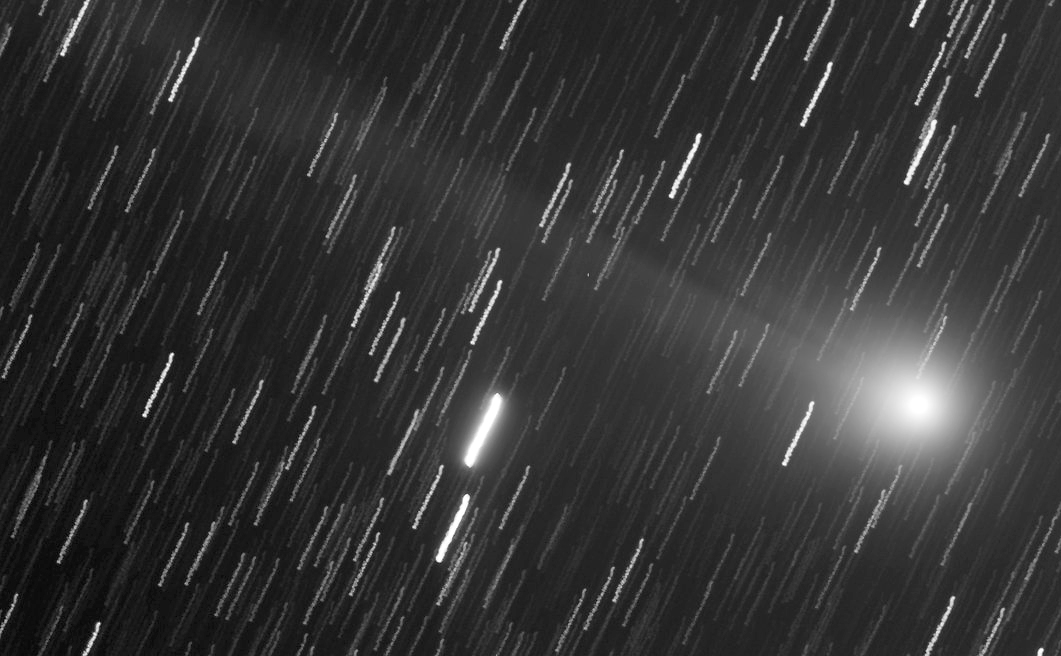
Comet Lovejoy, C/2014 Q2
On the local evening of Feb 23, ASTR 204 student Peter Roomian took 100, one-minute images of C/2014 Q2 thru our 140mm refractor. This photo is a combination of the images, manually aligned in CCDStack. Comet Lovejoy was closest to Earth on January 7th and is still visible in backyard scopes. More info. More info. Larger image.
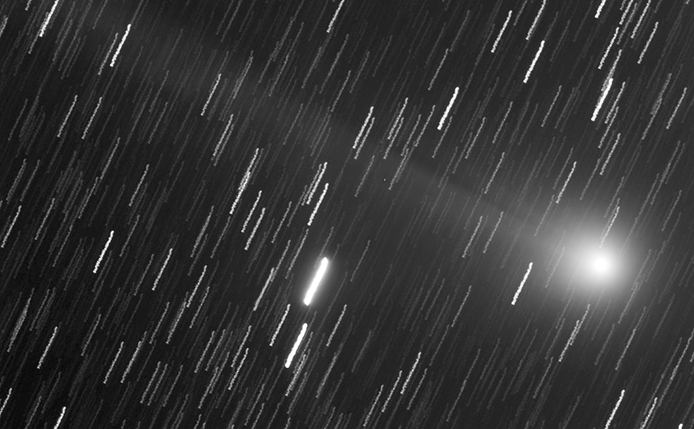
Comet Lovejoy, C/2014 Q2 -Peter Roomian, CSM Observatory
Fishhead Nebula
IC 1795 is a star forming region about 6,000 light-years away in the constellation Cassiopeia. ASTR 204 students Alex Chassy and Peter Roomian combined ten, 300 second exposures taken thru our 20" RC telescope to create this image. Larger image.
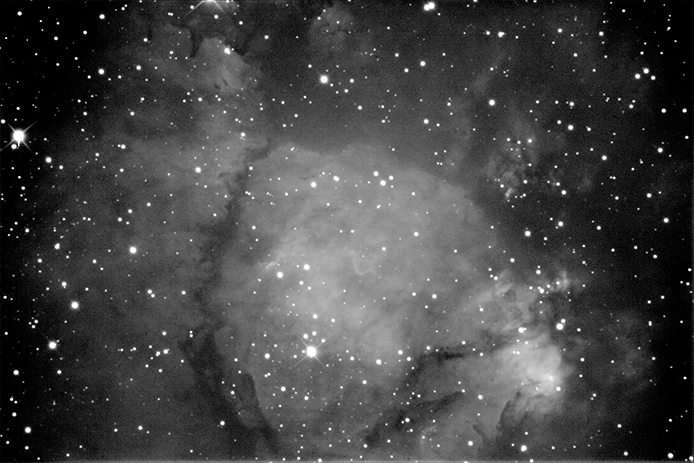
Oct. 23 Solar Eclipse
Image taken with iPhone thru 8" SCT @ f/6.3 from CSM Observatory.
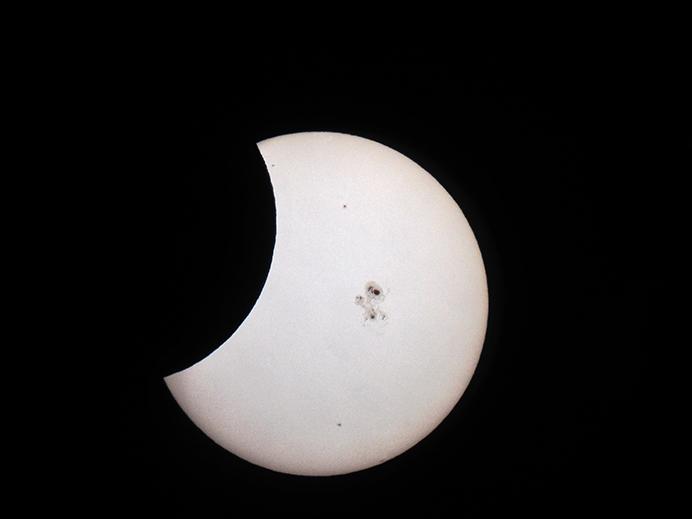
Partial Solar Eclipse Dean Drumheller, CSM Observatory
Pulsating Variable DY Peg
Photometry of short period SX Phoenicis variable DY Peg. 58 data points taken 11-07-14 UT
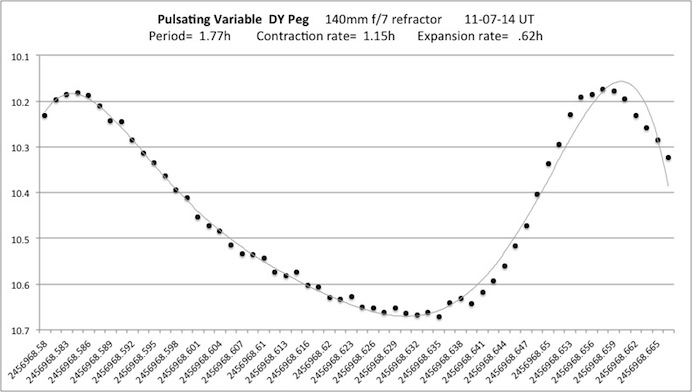
DY Peg Dean Drumheller, CSM Observatory
Exoplanet Qatar-1 b
Using our 140mm f/7 refractor, astronomy student Lukas Fragodt took data of exoplanet Qatar-1 b, during transit of its parent star (GSC4240:470) the local night of 11-24-14. This graph shows 60 data points taken between 7:50 pm and 10:14 pm local time. Download the csv data. JD time conversion tool.
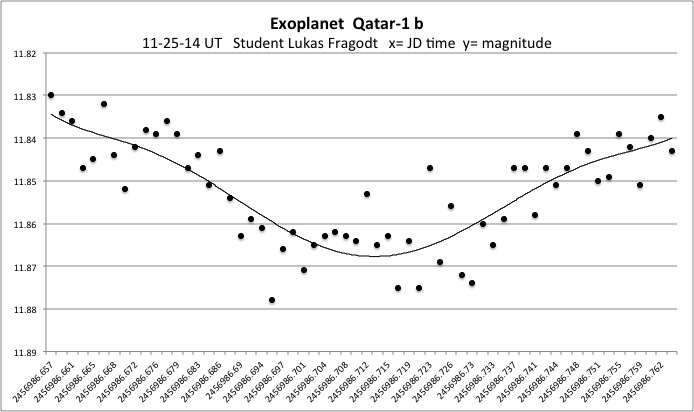
Qatar-1 b Lukas Fragodt, CSM Observatory
CY Aquarii
Variable star CY Aquarii is an SX Phoenicis type variable. These stars have lower metalicity and very fast periods. Studen Nick Denton took data of CY Aquarii with our 180mm refractor the local night of Oct. 1. A period of 1 hour and 46 minutes was observed, with an expansion time of 32 minutes and contraction time of 1 hour, 14 minutes.
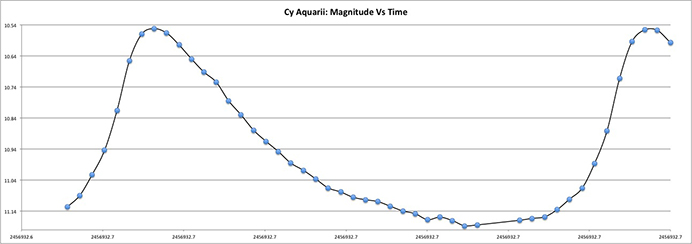
CY Aquarii light curve Nick Denton, CSM Observatory
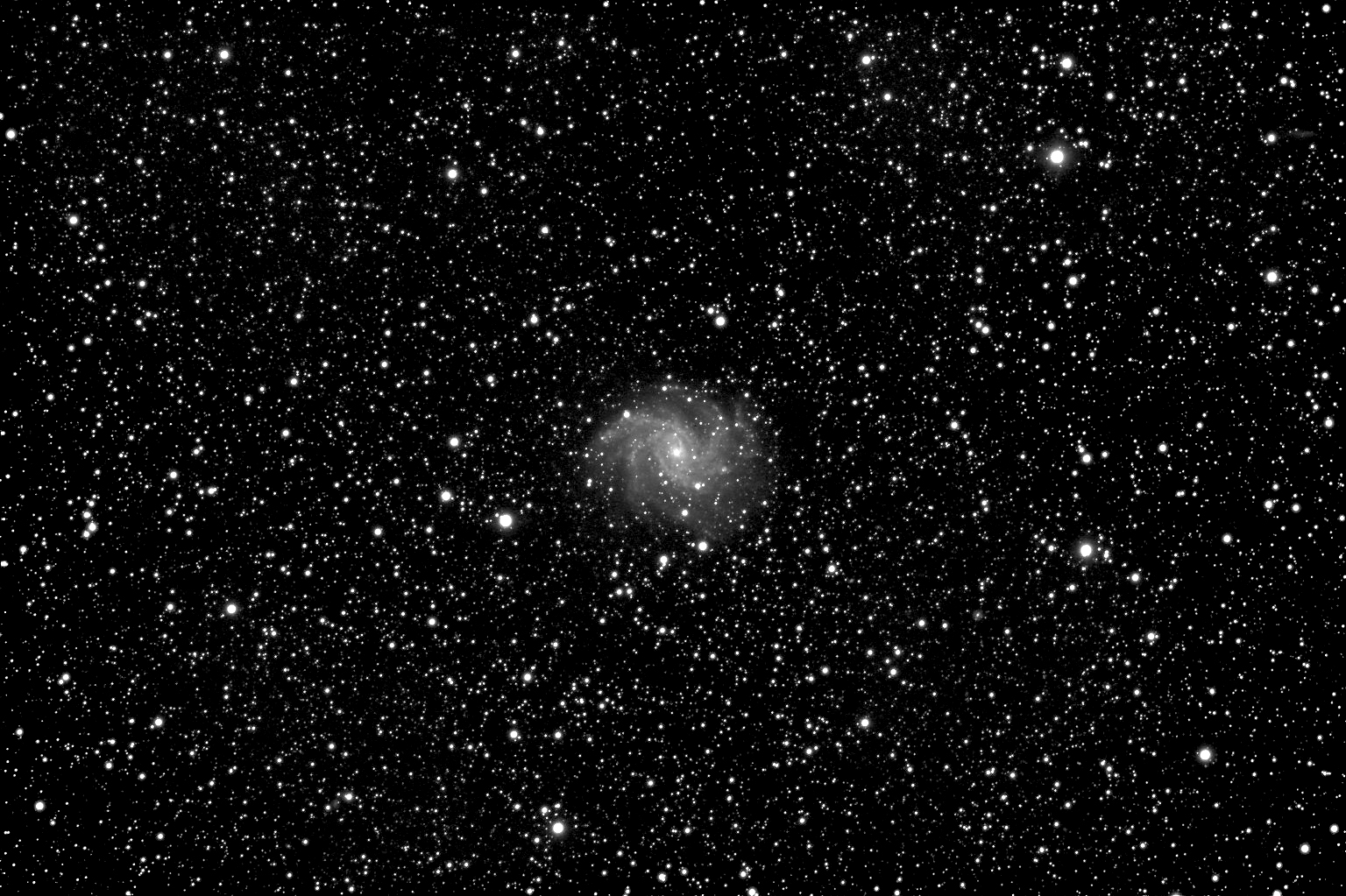
Firecracker Galaxy
Spiral galaxy NGC 6946 lies 22 Mly away in the constellation Cepheus. This image is a combination of 25 - 5 minute exposures taken by students Alex Chassy and Peter Roomian thru our 180mm refractor. Images processed and combined in CCDStack. Large image.
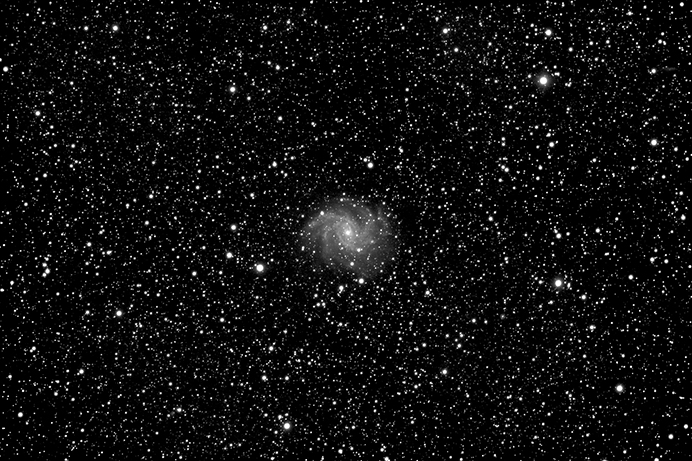
NGC 6946 Alex Chassy, Peter Roomian -CSM Observatory
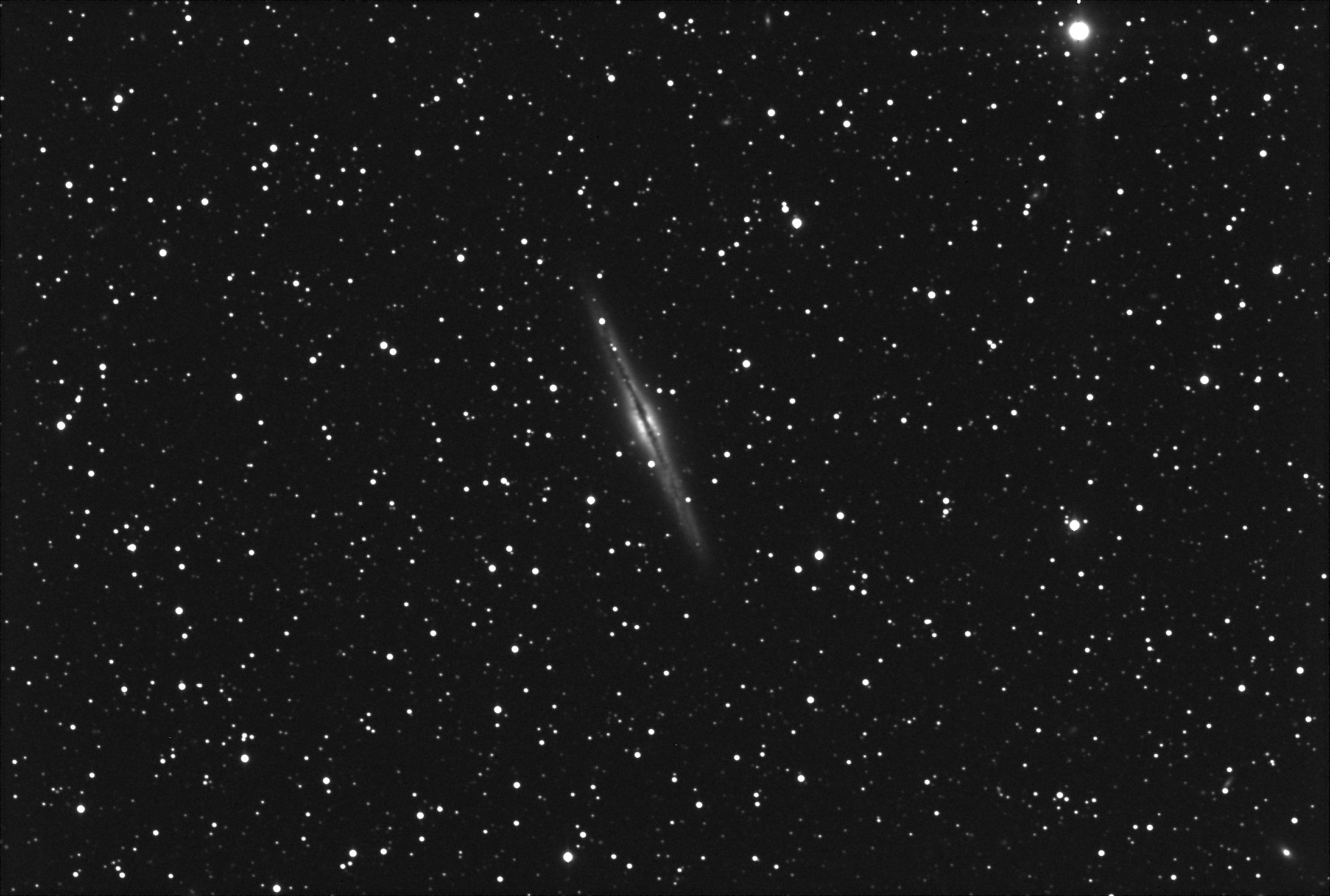
NGC 891
Edge-on galaxy NGC 891 lies 23 Mly away in the constellation Andromeda. Five, 300 second images were taken by students Ryan Dewitt and George Derugin on 10-27-14, with our 140mm TEC refractor. The images were combined by George Derugin using CCDStack software. NGC 891 looks similar to images of our own Milky Way taken from Earth.
Larger image.
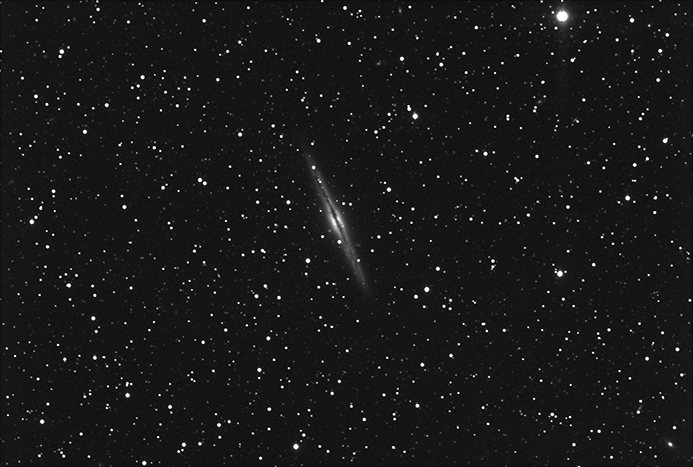
NGC 891 George Derugin & Ryan Dewitt, CSM Observatory
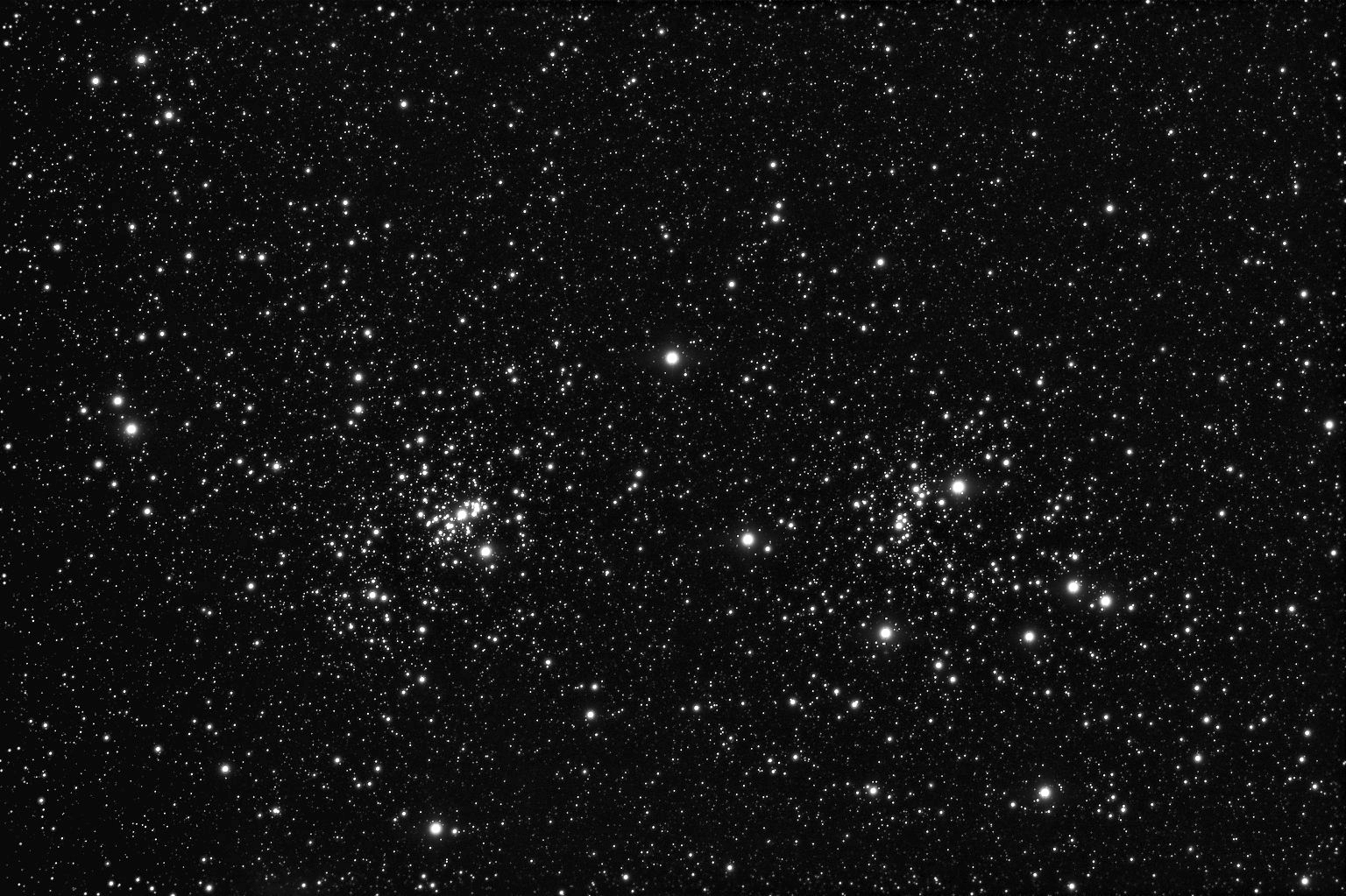
Double Cluster
The famous Double Cluster in Perseus lies 7.5 kly away. CSM student Lukas Fragodt combined 28, one-minute exposures in CCDStack, to create this image. CCDStack's deconvolution tool was applied. Both clusters are headed toward Earth.
Larger image.
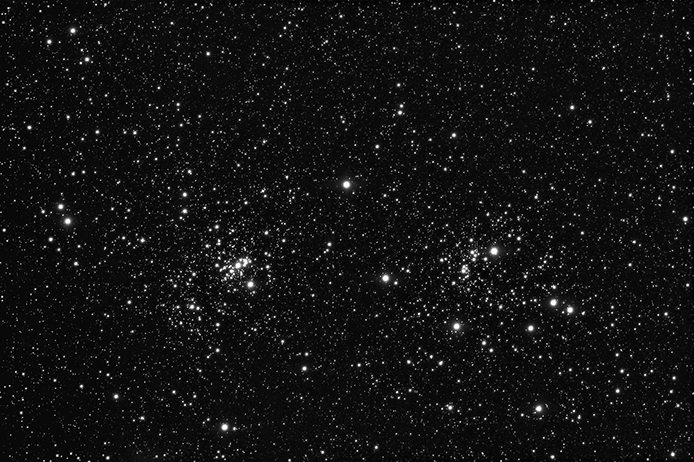
Double Cluster Lukas Fragodt, CSM Observatory
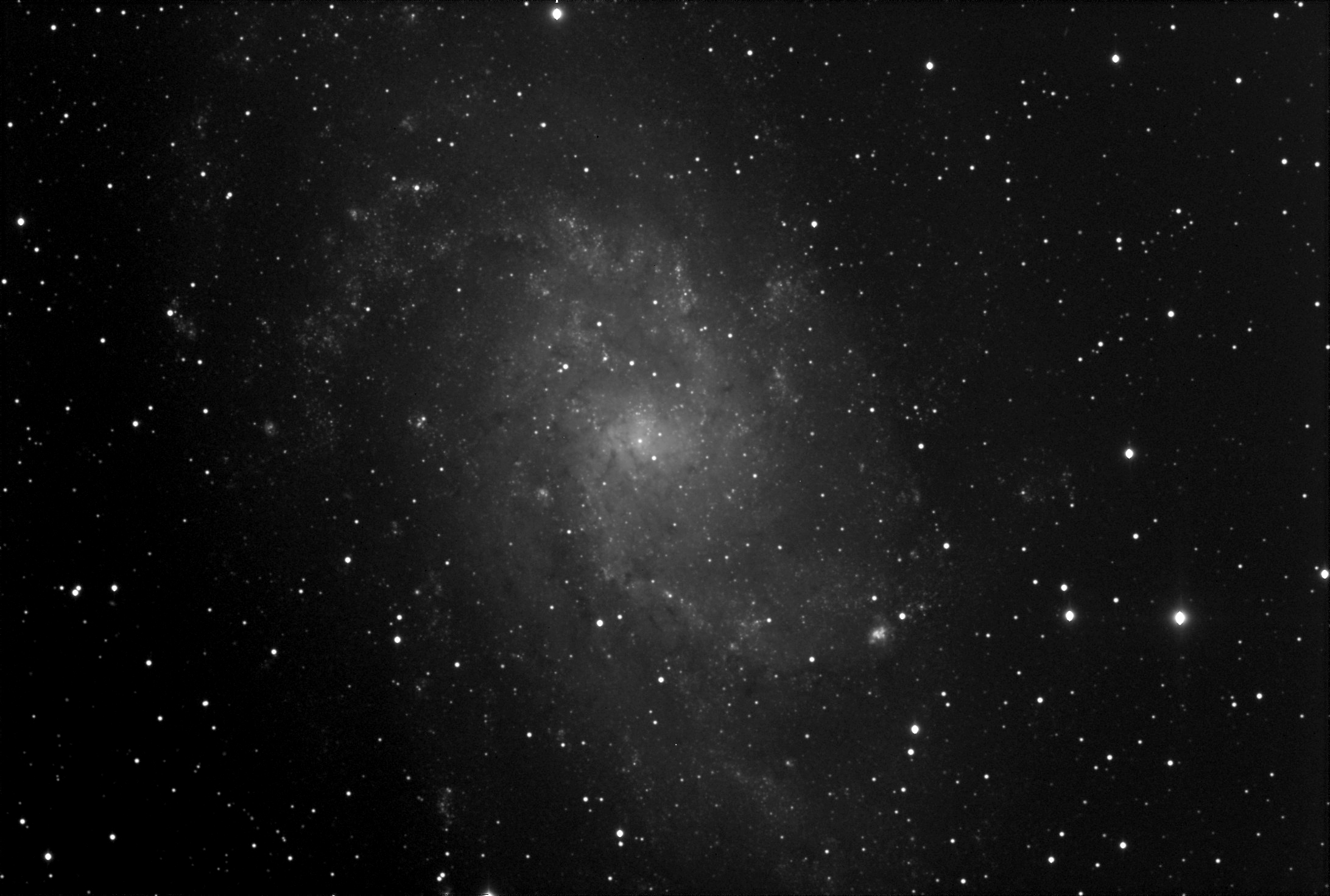
M33
M33 galaxy in Triangulum lies just 3 million light years away, and can barely be glimpsed naked eye, under dark skies. CSM student Ryan Dewitt combined 10, five minute images for this final result. M33 is in our local group of galaxies. Larger image.
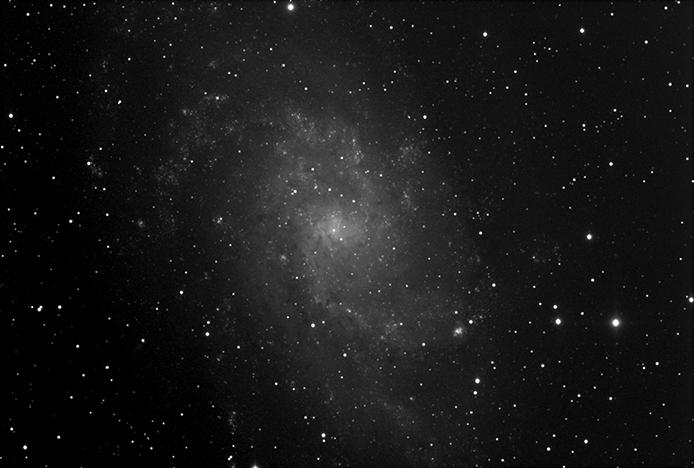
M33 Ryan Dewitt, CSM Observatory
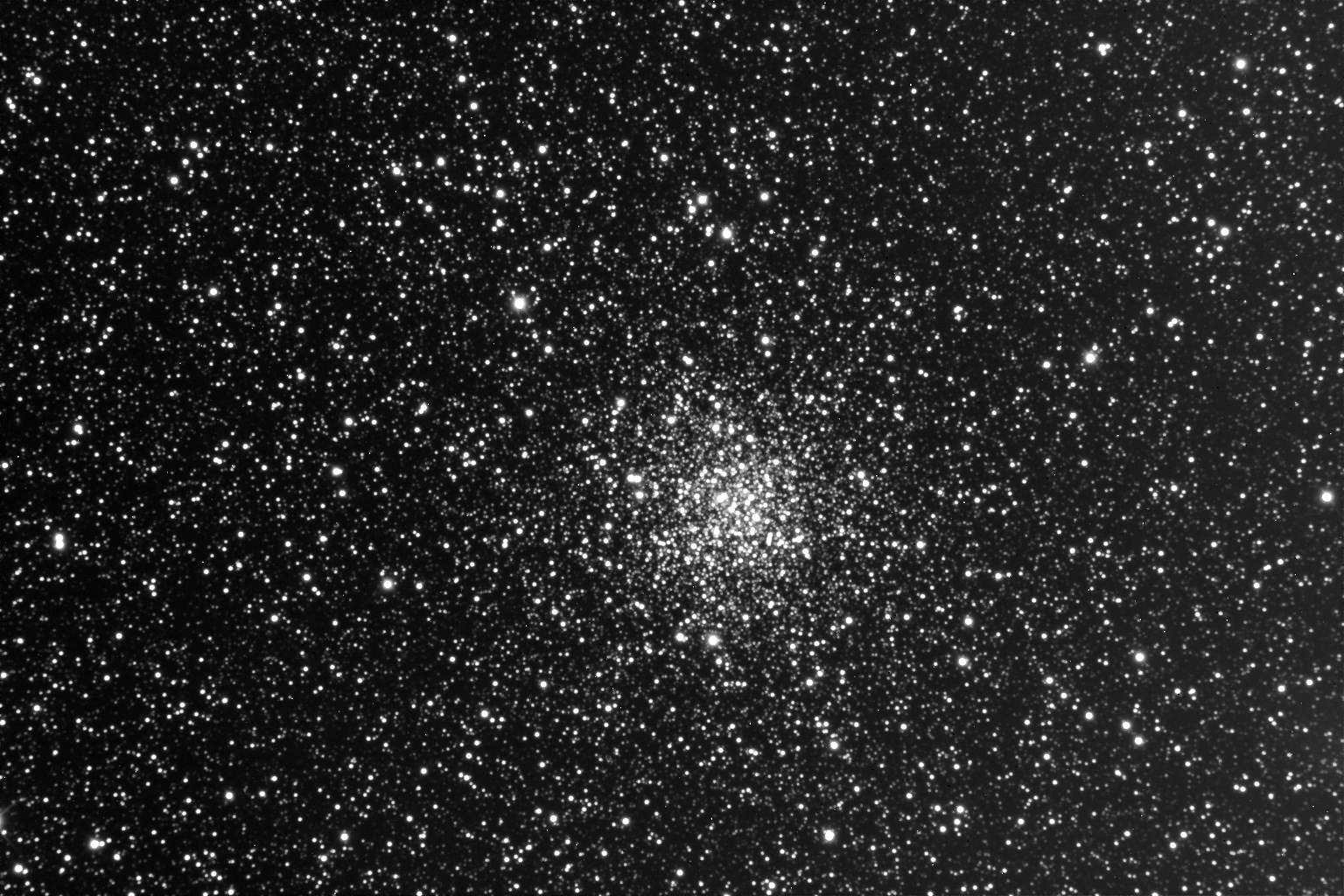
M71
Classified as a globular cluster, M71 lies 13,000 ly away in the constellation Sagitta. Student Nick Denton combined twenty, 5 minute images taken with our 20" RC telescope for this image. ~27 ly across, this loosely packed globular cluster is 10 billion years old and contains about 13,000 suns. Larger image.
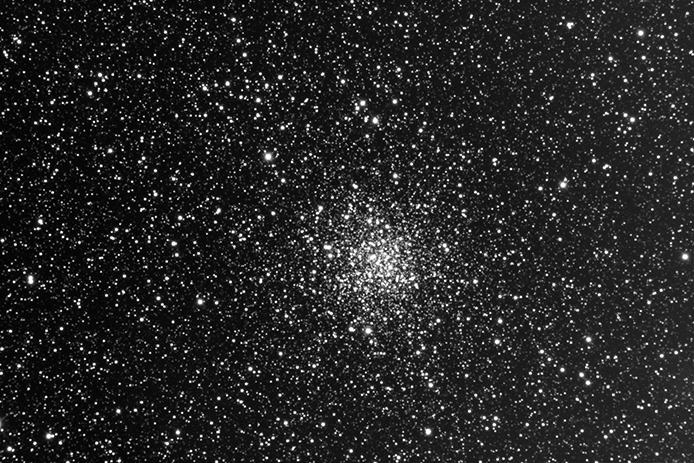
M71 Nick Denton, CSM Observatory
Bubble Nebula
The Bubble Nebula NGC7635, lies about 10,000ly away in the constellation Cassiopeia. Students Alex Chassy and Peter Roomian took this image thru our 20" RC telescope. Four, 300 second exposures were combined using CCDStack software. The stellar wind creating the bubble, comes from the 8.7 magnitude star within the bubble, near the bottom. Larger image
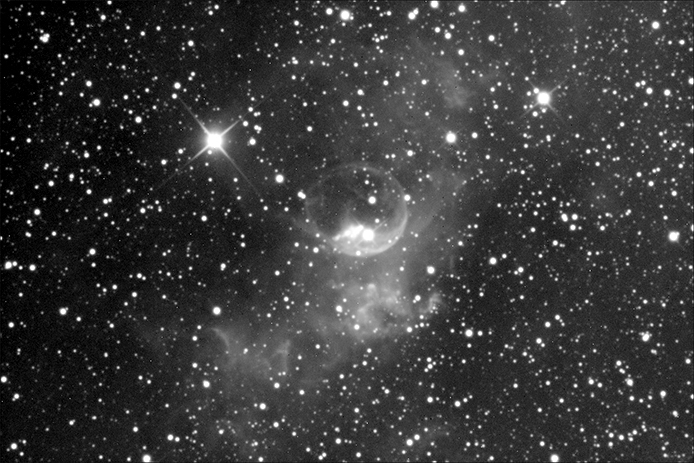
NGC 7635 Alex Chassy, Peter Roomian -CSM Observatory
Pelican Nebula
The Pelican Nebula is an H II region 1,800 ly away in the constellation Cygnus. This detailed image taken by students Peter Roomian and Alex Chassy is a combination of four, 5 minute exposures taken thru our TEC180 refracting telescope.
Larger image.
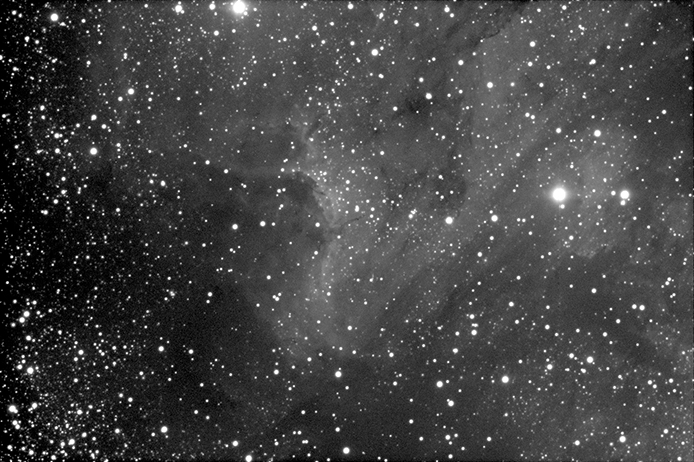
Pelican Nebula in Cygnus Peter Roomian & Alex Chassy -CSM Observatory
Exoplanet TrES-2b
Students Ryan Dewitt and George Derugin took data of transiting exoplanet TrES-2b the local night of 10/08/14. 36 data points are graphed here showing the transit centered ~ 8:51 local time (JD converter). TrES-2b lies 750 light years away in Draco and is a Hot Jupiter type exoplanet. TrES (Trans-atlantic Exoplanet Survey) is a network of telescopes searching for planets orbiting bright stars.
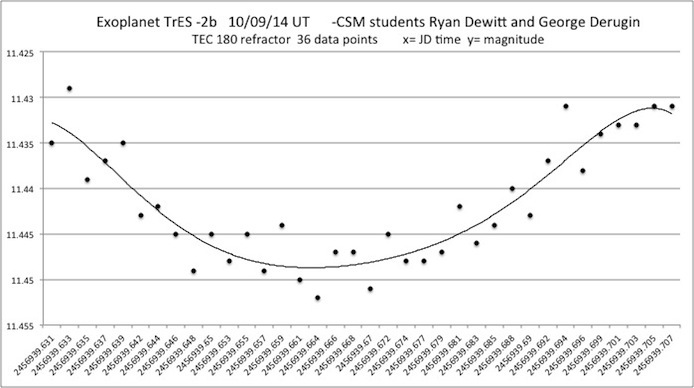
TrES-2b CSM students Ryan Dewitt and George Derugin
TT Del
Students Lukas Fragodt and Christy Conway took data of eclipsing binary star TT Del the local night of Aug 27, 2014. The graph below shows TT Del's light curve during primary eclipse. 30 data points are plotted covering ~ 62 minutes. The ToM (Time of Minimum), or mid eclipse was Aug 28 04:25:40.8 UT. See JD converter. Original data processing in Maxim DL, with graph done in Excel.
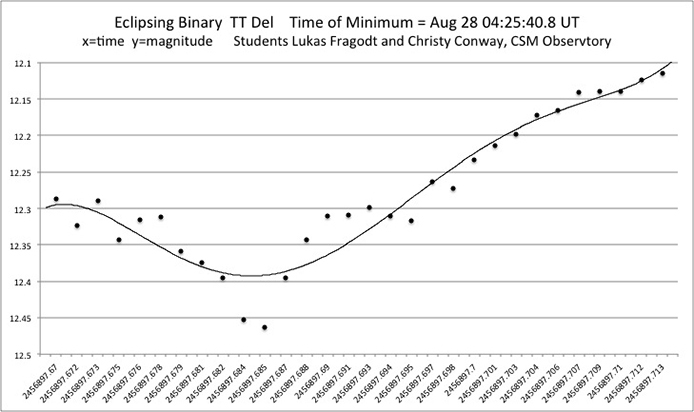
Eclipsing binary TT Del Lukas Fragodt, Christy Conway -CSM Observatory
P Cygni Spectra
Sudent Nick Denton took spectra of star P Cygni the local night of 9-8-14. The graph below shows H-alph hydrogen line ~ 6562 Ang. and strong Helium feature to the right.
“P Cygni is a very rare type of star. It is a blue supergiant known as a luminous blue variable or LBV star, and lies ~ 6,300 light years distant. Its spectrum shows a very prominent hydrogen alpha line and a less prominent ionized helium line. Both lines show an emission and an absorption component.
The red shifted emission component is from the outwardly expanding shell of hot gas. The blue shifted absorption component is from hot gas expanding towards the observer. This classic P Cygni profile indicates that this star is losing mass at the rate of 1 solar mass every 10,000 years.” -Professor Stanford
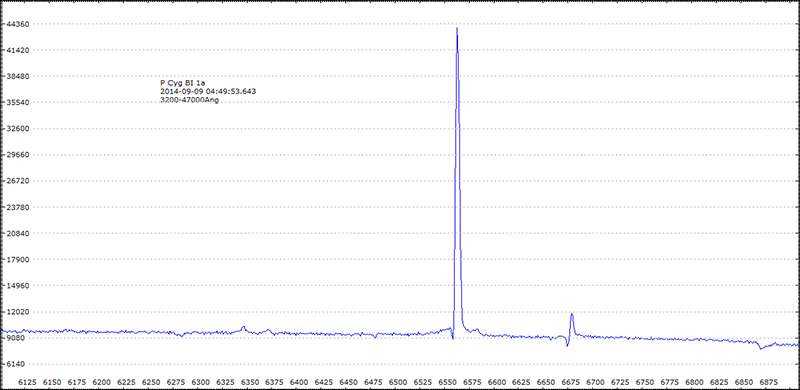
P Cygni spectrum Nick Denton CSM Observatory
Neptune / Triton
At magnitude 13.4, Triton is the brightest of Neptune's 14 known moons and has a retrograde orbit ~ 220,000 miles above Neptune. Triton is made of ~ 25% water ice, with a thin nitrogen atmosphere. Student Nick Denton took this 10 second image with our 140mm refractor and ST-10 CCD camera the local night of 9-22-14.
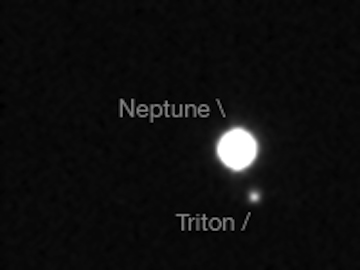
Neptune/Triton -Nick Denton, CSM Observatory
M101 Galaxy
M101 the Pinwheel Galaxy lies 20 Mly away in Ursa Major, and is 170,000 Ly across. ASTR 203 student Nick Denton combined twelve, 300 second images taken with our TEC180 f/7 refractor, to create this image. Final adjustments and cropping in Photoshop.
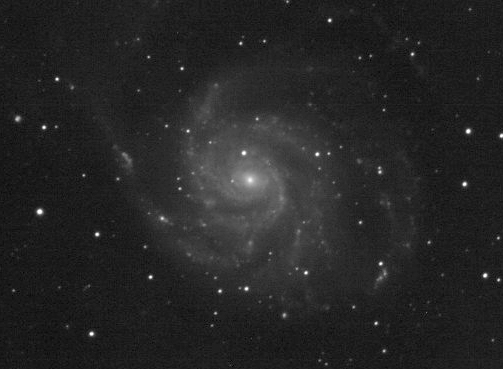
M101 Pinwheel Galaxy Nick Denton, CSM Observatory
SN2014J Spectra
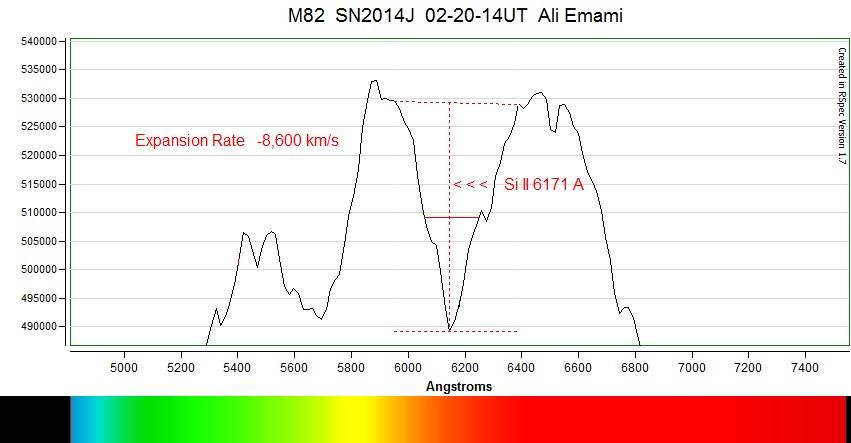
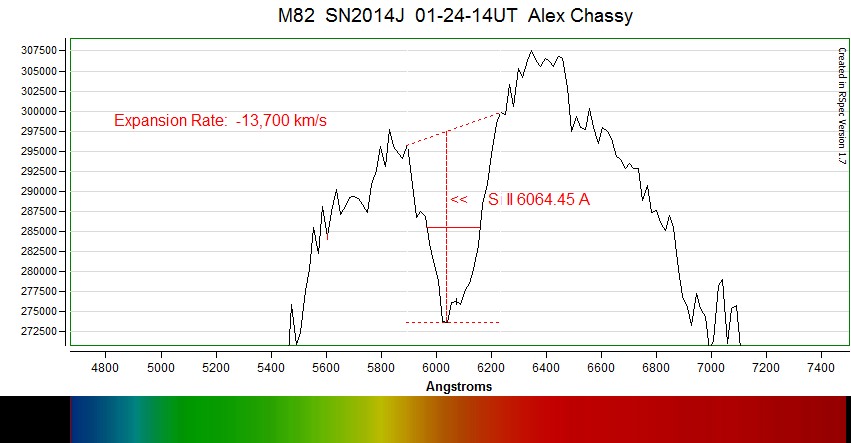
Here we are posting some of our low resolution spectra, beginning 01-24-14UT, of Type 1a supernova SN2014J in M82. Data from Alex Chassy, Jackelin Amorin, Ali Emami, Dmitry Ryashchentsev, and Dean Drumheller show changes in SN2014J expansion rate, measured from the Si II (Silicon) line. (rest wavelength 6355A)
Data is dark subtracted. ~ 8 five minute exposures are median combined. Spectra is taken thru our 140mm TEC refractor, and ST-10 CCD camera, with 200 RO diffraction grating filter. Dispersion ~16 Ang/Pixel. All processing with RSpec.
"We observe distinct changes in the Si II region of SN2014J spectra in the form of a possible shock wave, beginning 03-08-14 UT. This shock wave is slowing down due to expansion of the supernova ejecta, which in turn results in lower density, and a temperature drop. CSM students will continue monitoring this exciting event. Watch for further posts!" -CSM Astronomy Department
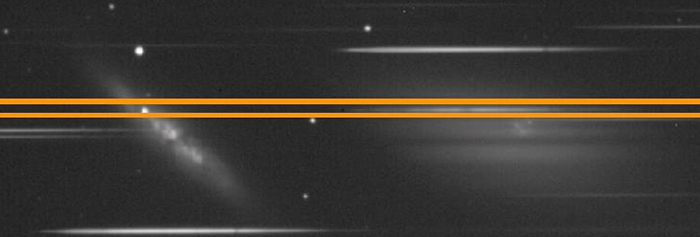
This image shows host galaxy M82 and SN2014J spectra (between yellow bars).
RSpec Screen shot of SN2014J spectra.
M3 RR Lyrae variables
This 2 image video of globular cluster M3 by student Peter Roomian, reveals about a dozen RR Lyrae type variable stars. Their pulsation periods range from ~5 to 15 hours. These short period variables make excellent standard candles for measuring distances out to 2.5 million light years. Peter imaged M3 with our AP130 refractor and ST2000 camera on loan from Dr. Ken Lum of San Mateo County Astronomical Society.
Comments welcome
Student Resources
NASA Julian Date converter
RSpec real time spectroscopy here
Space (Image) Invaders!
Here at CSM, we are used to seeing strange lights in the skies. No, we aren't talking about aliens. Take a look at what our students have captured in their images!
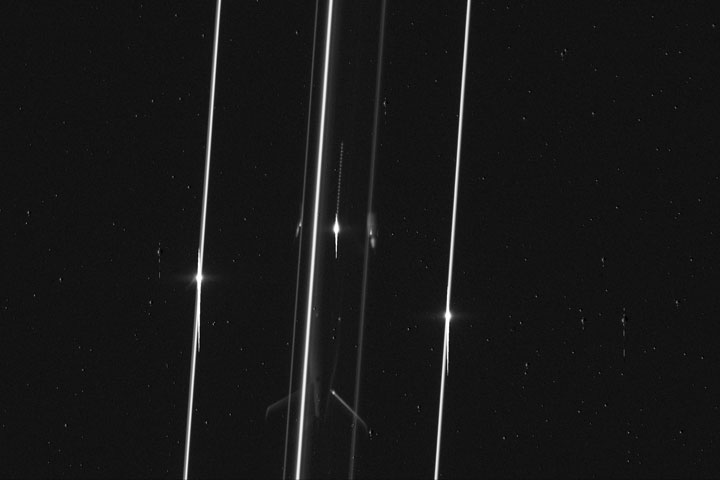
Being so close to SFO means that you can almost always see a plane somewhere in the sky. All too often, that somewhere is right in front of our telescopes! Having a plane ruin your long exposure shot of a galaxy can be frustrating, but occasionally we're impressed with how our shots turn out. Check out this plane who flashed a strobe light right as it passed overhead. If you look closely, you can make out the tail of the plane and two of the engines!
Planes are photobombing our images nightly. Take a look at this 30 minute timelapse looking toward SFO from our observatory. Credit: Justin Stevick